Deb’s Wild Garden
My first forays into the world of gardening led me to plant my springtime favorites–tulips, daffodils, hyacinths. The vibrant colors and heady perfumes were welcome sights and smells after the drabness of winter. I experimented with cottage style gardening too, planting lovely flowers like dianthus and peonies. But there was something missing. After moving to Northern New Jersey, where it was all but an exercise in futility to plant tulips (except maybe right along the edge of the road where deer might not be bold enough to eat every single bloom), I decided it would be better to plant for wildlife instead of constantly battling against the critters who visited my yard. And so began a journey of gardening for wildlife-creating a sanctuary in my own backyard that emphasized native plants and welcomed in the local flora and fauna. Today, I am gardening in Framingham, Massachusetts. I have a groundhog that lives under the shed in my backyard, and countless chipmunks (somehow, we mostly manage to get along). I am determined to identify the many species of pollinators that visit my garden, and delight in seeing the occasional hummingbird. Bringing Nature Home (a seminal work on gardening for the environment by Doug Tallamy) has benefited me as much as it has the local ecosystem, and probably more.
The Joy of Volunteers
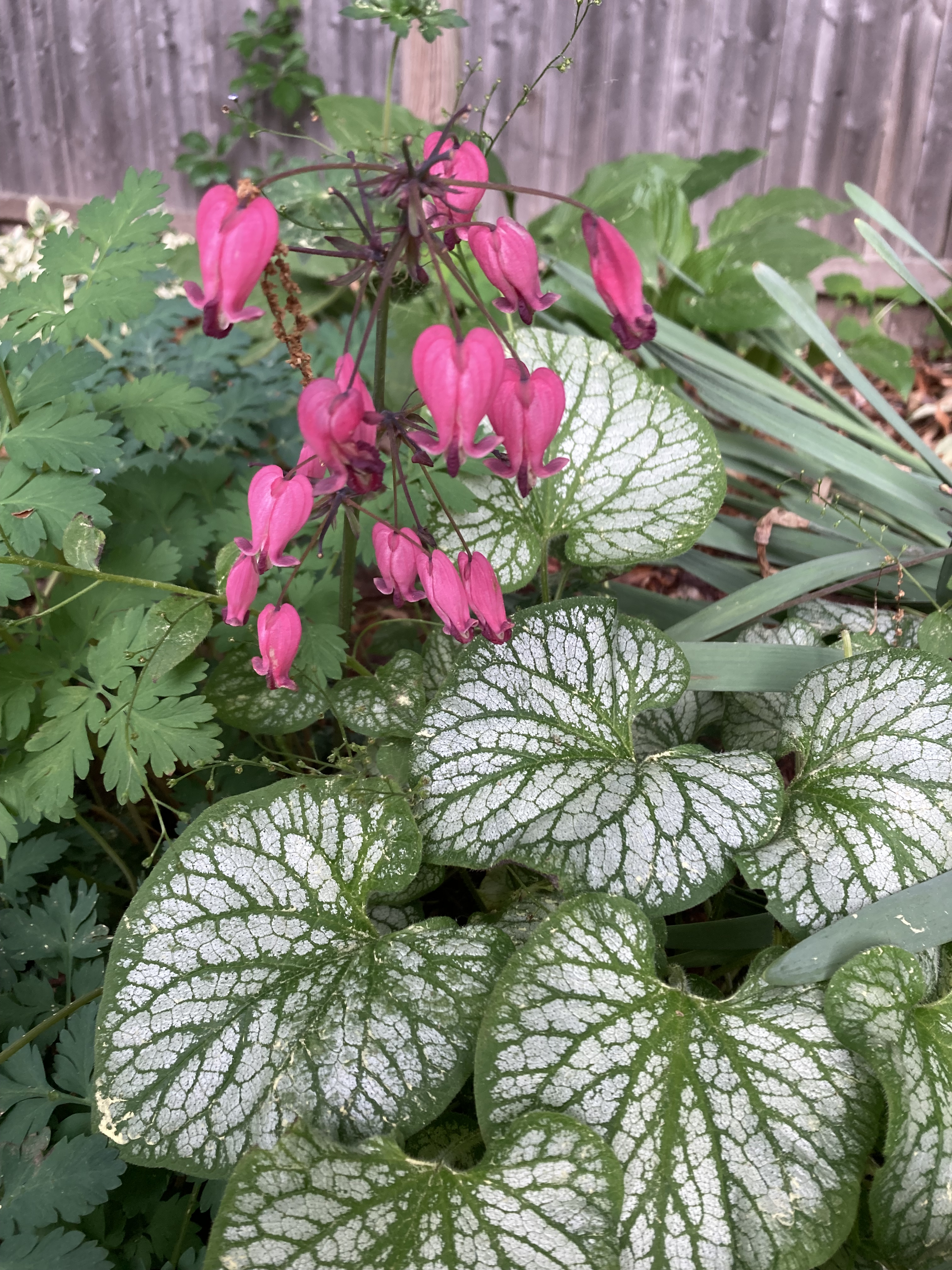
Every Spring, I eagerly check my garden for volunteers, plants that have decided on their own to make my garden their home. I am especially pleased when these new residents are native plants., like the native bleeding heart, Dicentra eximia, pictured below. Other beautiful native volunteers that are now gracing my garden include: Jack-in-the-Pulpit (Arisaema triphyllum), self-heal (Prunella vulgaris), and various species of goldenrod and aster. In the words of The Humane Gardener, Nancy Lawson (you can find her website at: www.humanegardener.com), I am happy to “let plants choose their destiny,” and am delighted when they decide to settle into my (their) garden.
While volunteer plants often grow from the seeds of plants already in the garden, they can also emerge from seeds carried by the wind or delivered by visiting animals such as birds. As more animals choose to visit my garden, I hope to see more of these special plants. They are living proof that I am working in harmony with the environment, and they make me smile with gratitude whenever they appear.
An array of resources
Our comprehensive suite of professional services caters to a diverse clientele, ranging from homeowners to commercial developers.
Études Architect App
- Collaborate with fellow architects.
- Showcase your projects.
- Experience the world of architecture.
Études Newsletter
- A world of thought-provoking articles.
- Case studies that celebrate architecture.
- Exclusive access to design insights.
“Études has saved us thousands of hours of work and has unlocked insights we never thought possible.”
Annie Steiner
CEO, Greenprint
Join 900+ subscribers
Stay in the loop with everything you need to know.


 Deb's Wild Garden